
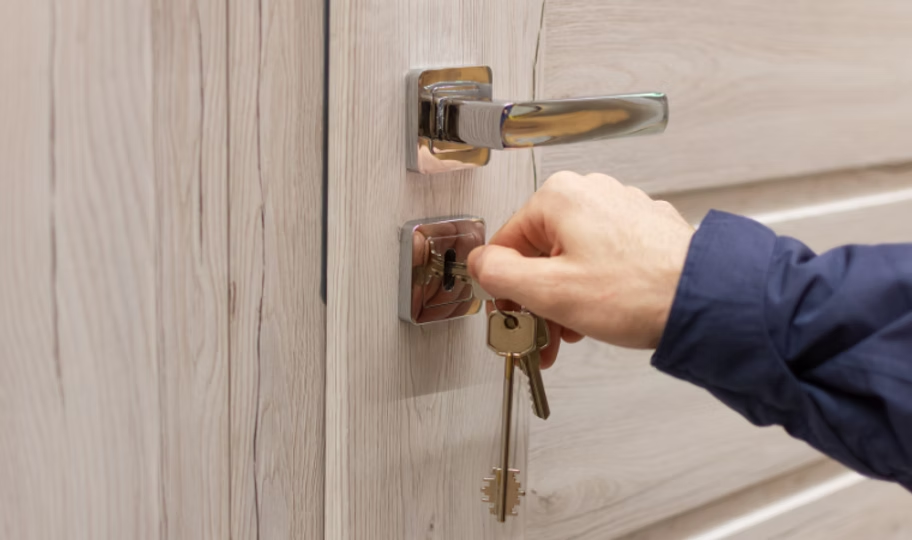
Managing multiple house keys can be inconvenient, especially if each exterior door uses a different lock. Rekeying a lock to match an existing key allows you to operate multiple locks with a single key without replacing the entire lock. It’s an affordable way to improve convenience while maintaining or enhancing your home’s security.
Rekeying is also a smart solution after moving into a new home, losing a key, or restricting access for someone who previously had a copy.
One of the biggest advantages of rekeying is convenience. Instead of carrying separate keys for your front door, back door, garage, or side entrance, you can use one key for all compatible locks.
Additional benefits include:
Before starting, gather the following tools:
Use a screwdriver to remove the lock from the door. Most residential locks can be removed by unscrewing the interior mounting screws and sliding the lock cylinder out of the door.
Insert the current working key into the lock and rotate it slightly. Using the plug follower, carefully push the cylinder plug out while keeping the springs and driver pins in place.
Take your time during this step, as the small internal components can easily become misplaced.
The lock cylinder contains several key pins that correspond to the cuts on a specific key.
To rekey the lock:
Proper pin alignment is essential for smooth operation.
Once the new pins are installed, carefully slide the cylinder back into the housing using the plug follower. Reassemble the lock and reinstall it on the door.
Insert the newly matched key and test the lock several times.
The key should:
If the key sticks or fails to rotate properly, inspect the pin placement and verify that the correct pin sizes were installed.
Yes. Many homeowners successfully rekey compatible residential locks using manufacturer-specific rekeying kits available at hardware stores. However, the process requires patience and attention to detail because of the small internal components.
If you have multiple locks, high-security locks, or simply prefer professional assistance, a licensed locksmith can quickly rekey several locks during a single service visit.
Learning how to rekey a lock to match an existing key is an excellent way to simplify key management while improving your home’s security. Whether you complete the project yourself using a rekeying kit or hire a professional locksmith, rekeying provides a cost-effective solution that allows you to control exactly who has access to your property.